


American composer, writer and conductor Samuel Hans Adler lived most of his life in Dallas. In this city, he wrote, created, studied and taught others. His professional music career lasted for more than six decades, during which he presented 400 outstanding compositions. Learn more at dallas-trend.
Samuel Adler’s biography
The future composer was born in the German city of Mannheim on March 4, 1928. His parents of Jewish origin were engaged in music too. His father was a composer and his mother was a pianist. When Samuel was just ten years old, his father was arrested after the events of Kristallnacht. As soon as the man returned home, he decided to flee the Nazi regime. Adler’s family left Germany for the USA via the Netherlands.
Finally feeling safe, Samuel Adler decided to follow in his parents’ footsteps and become a musician. At first, he studied musicology at Boston University and then at Harvard University. In 1949, Samuel decided to additionally receive a conductor’s diploma at the Berkshire Music Center.
The composer moved to Dallas in 1953 and began his active career. At first, Adler was a music director at Temple Emanu-El and established the children’s and adult choirs there. However, over time, the composer decided to focus only on his own creativity and pedagogy. He devoted many years of his life to teaching. He was a
- Professor of Composition at the University of North Texas College of Music (1957-1966)
- Professor of Composition at the Eastman School of Music at the University of Rochester (1966-1995)
- Chairman of the Music Department at the Eastman School of Music (1973-1994)
- and has been a member of the composition faculty of the Juilliard School (since 1997).
Another interesting fact from Samuel Adler’s biography is that his wife Emily Freeman Brown is also a professional conductor and works at the Bowling Green Philharmonic.
Samuel Adler’s composition technique
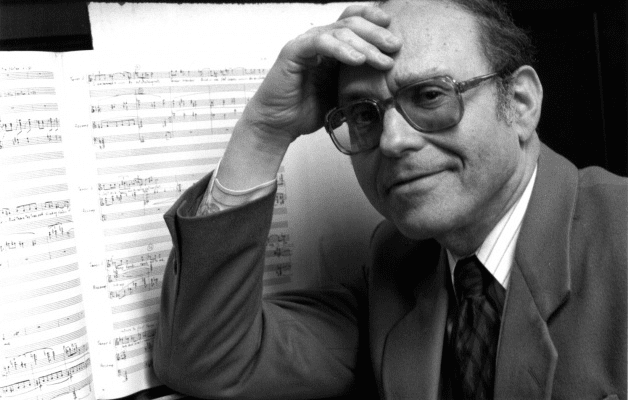
The peculiarities of the composer’s style became a subject of discussions among music critics. According to American musicologists, Adler skillfully combined a variety of available techniques into a unique and special one. It included free atonality, diatonicism and serialism.
In general, Samuel Adler’s music had a deep connection with Jewish culture. It was also aimed at drawing attention to difficult historical events, which were frequent challenges on the way of the Jewish diaspora.
In addition to music, the composer was also engaged in writing. He wrote three books, Choral Conducting (its first edition by Holt Rinehart and Winston in 1971 and the second one by Schirmer Books in 1985), Sight Singing and The Study of Orchestration. He also wrote a lot of articles for specialized magazines, reference books and books, which were published in the USA and far abroad.
Awards of the composer
Samuel Hans Adler was awarded countless honors for his activities. Here are just some of them:
- Honorary Professorial Fellow of the University College in Cardiff (1984)
- Distinguished Alumni Award from Boston University (1986)
- Member of the Academy of Arts in Berlin, awarded for distinguished service to music (1999)
- a lifetime appointment to the American Academy of Arts and Letters (2001)
- and an induction into the American Classical Music Hall of Fame (2008).