


World War II was a turning point for the entire world, and Dallas was no exception. As the lives of thousands of families changed forever, the city’s cultural institutions, especially theaters and movie houses, took on a crucial mission. They didn’t just offer entertainment; they boosted the nation’s morale, becoming a vital escape where people could get away from the harsh realities of wartime. While men went to the front lines, the women and elderly who remained on the home front kept daily life going. For them, theaters were an essential source of emotional and psychological relief. More at dallas-trend.
The Birth and Rise of The Dallas Little Theatre
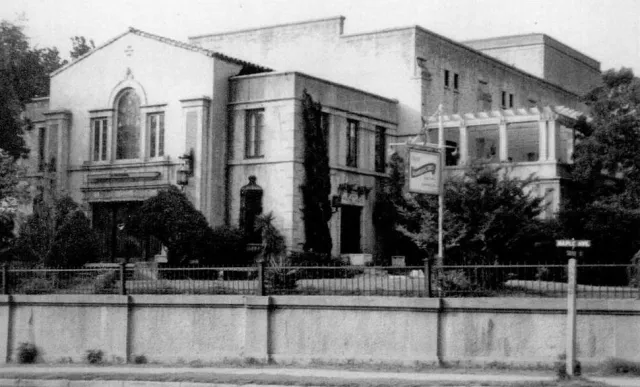
The story of The Dallas Little Theatre, one of the city’s most important cultural centers, began back in the 1920s. Its roots trace back to the Dramatic Department of the Dallas Women’s Forum, founded by Mrs. C. F. Weiland on September 5, 1920. Her goal was to unite local theater enthusiasts. Inspired by the success of “little theaters” across the country, six members of the forum decided to give their initiative a new, more formal structure. On January 7, 1921, they received a charter and officially incorporated The Little Theatre of Dallas. Notably, the theater’s first board of directors was composed entirely of women.
Under the direction of Oliver Hinsdell, who took the helm in 1923, the organization experienced a true golden age. The Dallas Little Theatre gained national acclaim, winning the prestigious Belasco Cup at the National Little Theatre Tournament in New York City three years in a row: 1924, 1925, and 1926. These triumphs not only brought the theater fame but also significantly boosted its popularity among Dallas residents, leading to steady growth in attendance over several seasons. In 1923, the theater purchased a lot on Olive Street and later, in 1927, moved into a new, albeit expensive, building on Maple Avenue. This building, despite its grandeur, became a source of persistent financial problems, as the person who had pledged the bulk of the construction funds died suddenly before fulfilling the promise.
Despite its financial troubles, the theater continued to grow. In 1934, it opened a drama school that maintained close ties with Southern Methodist University (SMU) and even MGM studios. Thanks to these connections, The Dallas Little Theatre was chosen as the audition site for actresses vying for the role of Scarlett O’Hara in “Gone with the Wind,” a clear testament to its high status in the theater world.
The Theater in Wartime and Its Sad End
When war engulfed the world, The Dallas Little Theatre, like the rest of the country, shifted to a wartime footing. A key moment was the 1941 return of Talbot Pearson, the theater’s first director. He immediately revived the theater’s workshop and began working closely with city officials. Pearson was appointed secretary of the Dallas Fine Arts Commission. The commission’s main goal was to provide quality entertainment for both Dallas residents and, crucially, for military service members.
The theater actively supported the war effort by launching a wide range of patriotic initiatives. One of the most important projects was the “army camp shows.” The first production, “Ghost Train,” was staged in Dallas in 1942 and then toured military camps within a 200-mile radius. The Dallas Little Theatre allowed soldiers to attend all its Dallas performances for free before the shows went on the road. Additionally, in March 1942, the theater partnered with radio station WRR to launch a weekly radio program, also aimed at entertaining and supporting service members.
However, despite all its efforts, the war dealt the theater a fatal blow. Attendance dropped steadily, and due to mobilization and a general shortage of men, the theater faced a severe lack of actors. This forced its leadership to make a difficult decision. On April 26, 1943, the final performance, “Candida,” was held. It was symbolically directed by Talbot Pearson, the same man who had opened the first season 23 years earlier. After the war, there were attempts to revive the theater, but they proved futile, and by 1956, the organization had ceased to exist. It was a sad end to one of the brightest chapters in Dallas’s theatrical history.
The Entertainment Epicenter on Elm Street
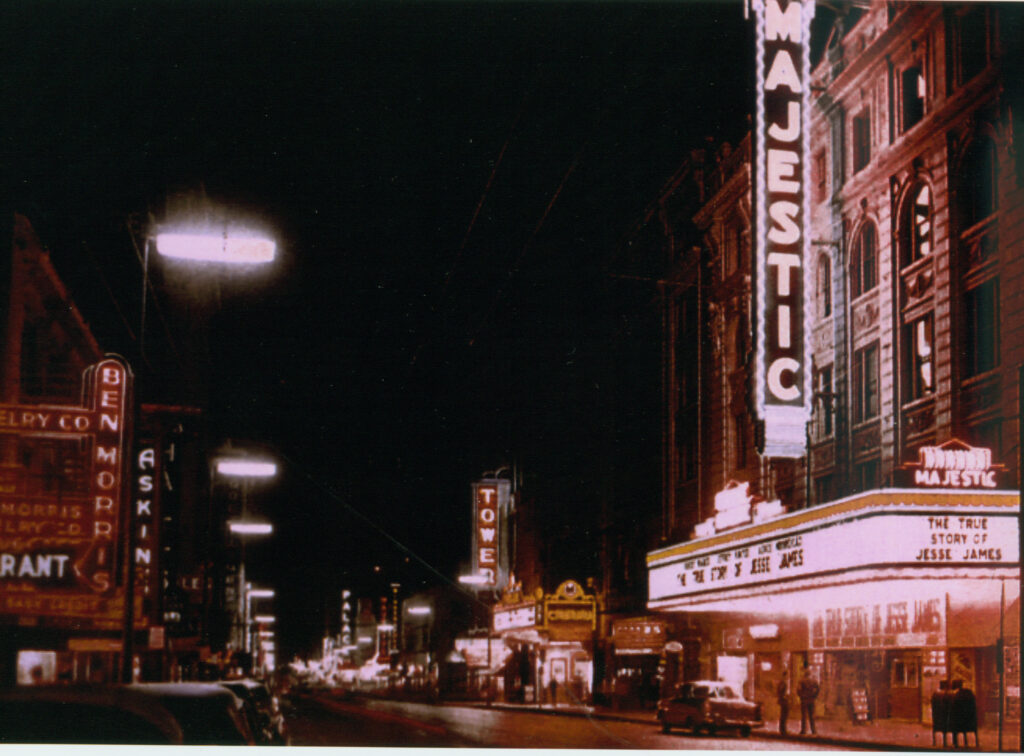
Beyond The Dallas Little Theatre, the city’s cultural life thrived in other venues. For example, Dallas Summer Musicals, founded in 1941, kicked off its history with a production of the musical “Show Boat” and continued to stage Broadway shows that brought audiences joy and hope during those difficult times.
Movie theaters also played a key role in Dallas life. Elm Street was the true epicenter of entertainment, home to numerous theaters from the 1920s to the 1970s. Their brightly lit marquees and neon signs drew thousands of people who came to see the latest films and newsreels.
The Majestic Theatre, built in 1922, was a true architectural masterpiece and the flagship of Karl Hoblitzelle’s theater chain. Its opulent interior, styled after a classical Roman forum, was stunning in its grandeur, and it remained a popular gathering place throughout the war. Today, the Majestic is the sole surviving landmark of that golden era.
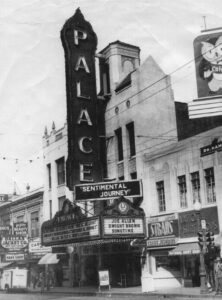
Other theaters on Elm Street also had their unique features. The Palace Theatre, which opened in 1921, was considered the largest in downtown, seating 3,000 people. Its design was unique, as the massive auditorium was set perpendicular to the street, concealing its enormous size.
The Melba Theatre, which opened in 1922, dazzled with its luxurious interior and a grand Spanish Renaissance-style facade.
The Capitol Theatre was a low-price movie house that became a favorite spot for kids coming to watch Westerns and horror films.
The Telenews Theatre held a special place during the war, opening in 1941 just three weeks before the attack on Pearl Harbor. It was unique, specializing exclusively in newsreels, and it thrived as Americans craved news from the front. Its lobby even featured teletype machines, and there was a reading room on the second floor. After the war, however, demand for newsreels plummeted, and the theater had to change its format, eventually showing more adult-oriented shows before closing for good.
The End of an Era and a New Reality
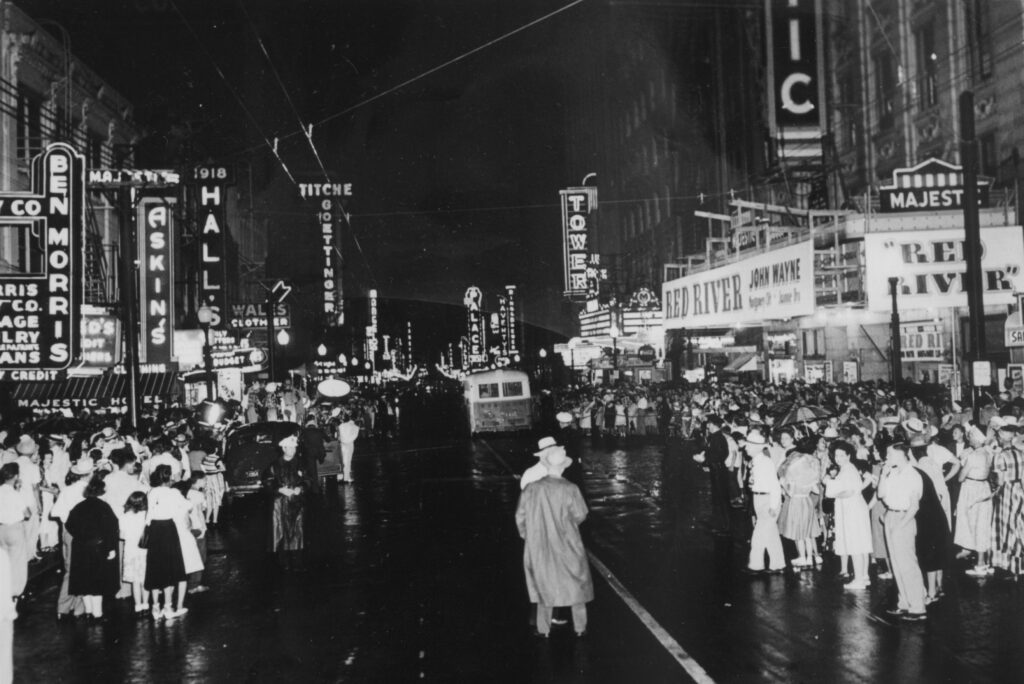
After the war ended and large multiplex cinemas appeared in the suburbs in the 1960s, many of the historic theaters on Elm Street began to decline. The new cinemas were more convenient, had large parking lots, and offered a wider selection of films. One by one, the once-grand theaters closed their doors. Most of them were demolished in the 1980s during an office construction boom.
The history of The Dallas Little Theatre and the Elm Street movie houses is a striking example of how cultural institutions reflected and endured the harsh realities of wartime. They not only provided entertainment but also served an important public mission by raising funds for the military and helping to unite the community. Ultimately, the war accelerated changes in Dallas’s cultural landscape, leading to a complete renewal of its theater scene.
Sources: